Here is a question worth sitting with: if your firm already has access to a client’s medical records, why does it still take weeks to build a clear picture of what happened to them?
It is not a technology problem. It is not a staffing problem. It is a usability problem. And it is costing personal injury and workers’ compensation firms more than most of them realize.
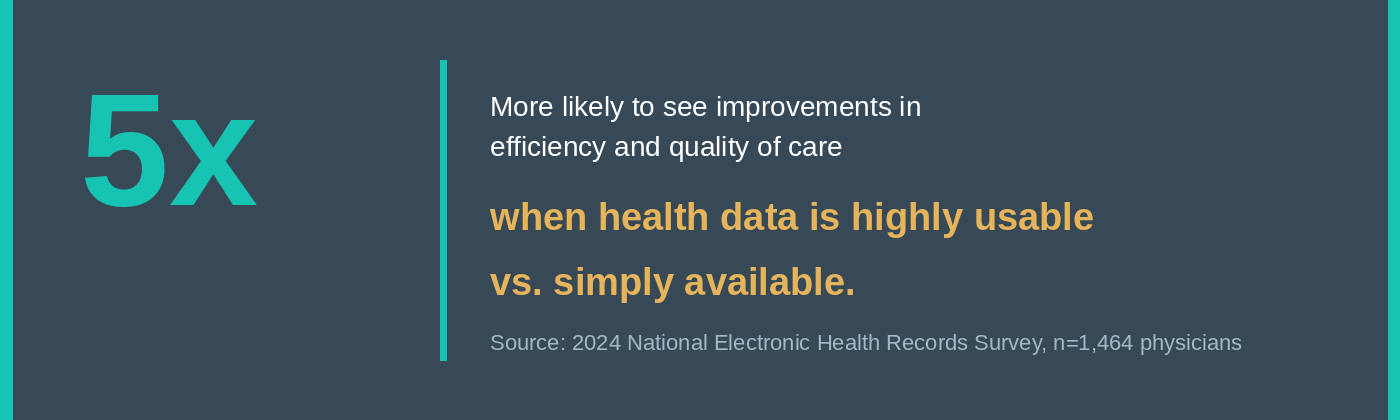
For my doctorate at the Medical University of South Carolina, I spent years researching exactly this gap. I analyzed responses from 1,464 physicians using data from the 2024 National Electronic Health Records Survey, looking at whether the frequency of health information exchange or the usability of that information had a stronger relationship with real improvements in care quality, efficiency, and coordination. The findings were unambiguous, and they apply far beyond the clinical setting.
What the Data Actually Shows
Both factors mattered. But usability won by a significant margin.
Physicians who found external clinical information highly usable were nearly five times more likely to report improvements in efficiency and quality of care compared to those working with the same data in a harder-to-use form. Frequency of exchange, meaning how often data was actually being shared, showed considerably weaker effects across every outcome measured.
That finding cuts against the assumption driving most interoperability investment right now, which is that more data sharing leads to better outcomes. It does not, at least not automatically. What drives better outcomes is whether the information that arrives can be understood and acted on at the moment a decision needs to be made.
In a PI or workers’ compensation context, that moment is the demand letter, the deposition, the mediation. And if the records are not organized and interpretable by then, they are not doing their job regardless of how quickly they were retrieved.
The Problem Nobody Names Correctly
Most firms treat a struggling records process as a retrieval problem. The records are slow to arrive, incomplete, or spread across too many providers. The answer seems obvious: get them faster, get more of them, chase harder.
But the research shows that exchange frequency and usability are not strongly correlated. The organizations getting the most data are not necessarily the ones getting the most value from it. In fact, increasing retrieval volume without addressing usability often makes things worse. Instead of a small pile of unusable documents, you now have a large one.
The firms that figure this out stop asking how do we get more records and start asking how do we make the records we have actually useful. That shift in thinking changes everything about how they build a case.
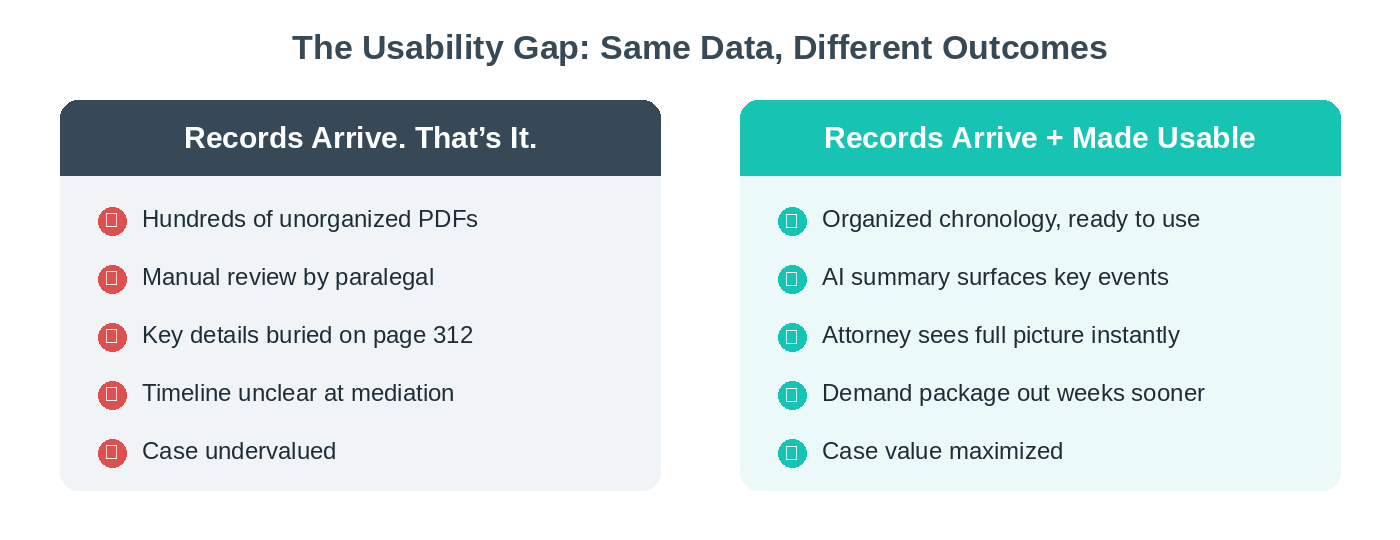
When medical records arrive as hundreds of pages of unorganized PDFs, paralegals do their best. But important details get missed, timelines get muddled, and attorneys walk into negotiations without the complete picture. A treatment note that would have supported a key argument sits on page 312 of a document nobody had time to read fully. The case gets undervalued. The client gets less than they deserve.
That is not a retrieval failure. That is a usability failure. And it is entirely preventable.
How MedicalEase Closes the Gap
At MedicalEase, we built the platform around one core belief: getting the records is only half the job. Making them usable is the other half, and for too long the industry has only been solving for one.
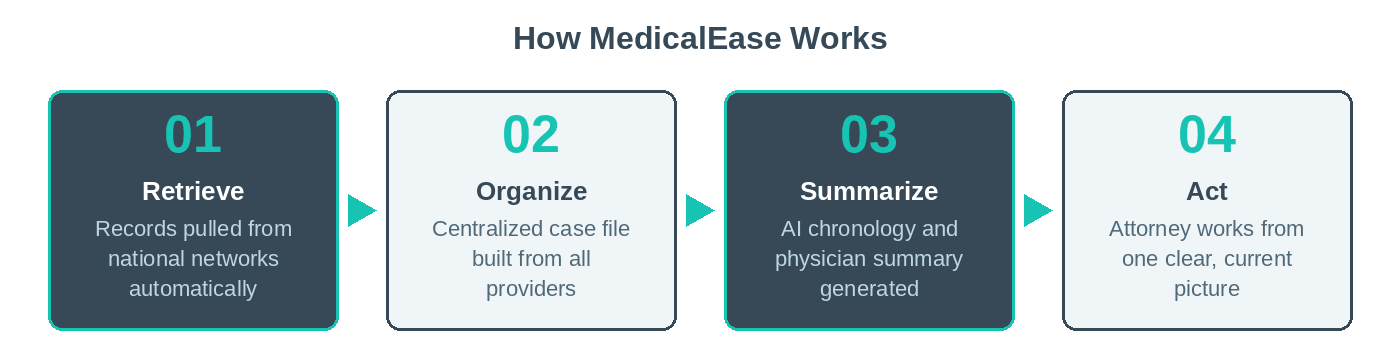
MedicalEase handles retrieval automatically, which means paralegals stop chasing providers by phone and fax and firms get a more complete record set faster than traditional retrieval vendors deliver. But what sets MedicalEase apart is what happens after the records arrive.
The platform organizes everything into centralized case files and generates physician designed chronologies and AI driven summaries that lay out the medical story in a format built for legal professionals. Key health events, treatment timelines, clinical progressions, and gaps in care are surfaced clearly so attorneys and paralegals can work from a picture that actually makes sense rather than a data dump that requires weeks of manual review.
When new records come in they merge directly into the existing chronology. Every access and every action is documented and defensible. And everyone who touches the case, attorneys, paralegals, case managers, claims administrators, works from the same organized, current record.
What This Means for Firms That Want to Grow
The PI and workers’ compensation market is competitive. Cases are complex. The firms building a reputation for thorough, well documented, efficiently handled cases are the ones that attract better clients and close stronger settlements.
Those firms are not necessarily the ones with the biggest teams. They are the ones that figured out how to make medical records work for them instead of against them. They know their client’s medical history before they walk into any room. They catch the details other firms miss. They move faster because their process does not have a three week records bottleneck built into it.
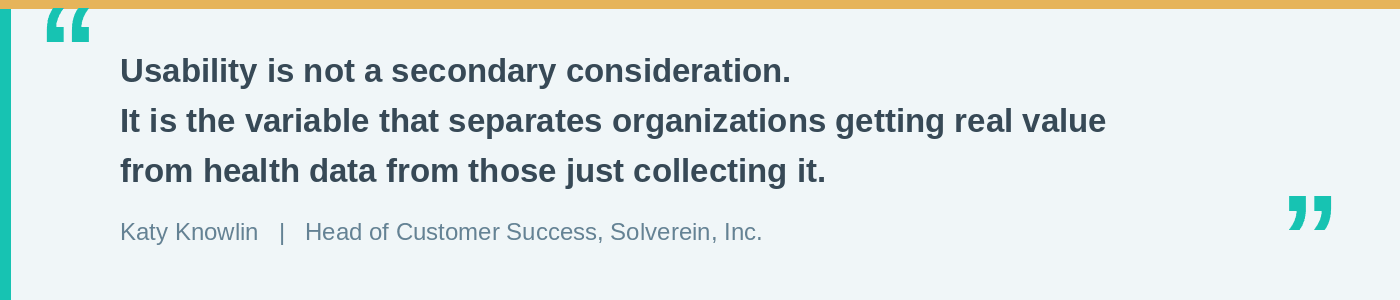
Research showed that usability is not a secondary consideration. It is the variable that separates organizations getting real value from health data from those just collecting it. In clinical medicine that means better care. In legal practice it means better outcomes for clients and stronger results for firms.
MedicalEase was built to deliver both.